
Car rental in Puerto Rico

- Secured payment guarantee
- 4 million users
- Multi-language support
- Booking of any class cars
- 600 providers worldwide


 Capital:San Juan
 Language:EN, ES
 Currency:USD
 Drive on:Right Side
Tips for Renting a Car Inexpensively in Puerto Rico
Looking for a cheap car rental in Puerto Rico? With Economybookings, you can easily compare multiple providers to find the best possible deal across the island. Whether you're planning to explore San Juan’s historic sites or venture out to the beaches and mountains, a quick comparison can save you time and money.
- Compare pickup locations – Select a broader area instead of a specific location to unlock more deal options, including off-airport savings.
- Slightly adjust pickup times and dates – Even changing your booking by an hour can reveal lower rates.
- Choose economy or compact cars – These vehicle types are usually the most budget-friendly.
- Book early – Peak travel seasons like winter holidays and summer often see higher prices, so reserving in advance helps secure better rates and availability.
Tips When Renting a Car in Puerto Rico
- Rent a car if you plan to visit beaches, mountain towns, or attractions outside San Juan—public transport is limited beyond metropolitan areas.
- Avoid rush hour traffic on PR-22 and PR-18, especially around San Juan.
- Pick up your rental car at Luis Muñoz Marín International Airport (SJU) for the widest selection and access to toll road options.
- Choose a mid-size or compact car for easier parking in historic districts and crowded beach towns.
- No emission zones to worry about, but toll roads are common—ask your rental company about AutoExpreso toll payment options.
- Always inspect the car and take photos before and after your rental.
Driving Tips in Puerto Rico
- Drive on the right and overtake on the left.
- Locals sometimes flash headlights to indicate they are coming through, especially at intersections.
- Stay out of the left lane on highways unless passing.
- Use parking apps like El Parkin or ParkMobile in San Juan, or local lots near Old San Juan and Condado.
- Pay close attention to parking signs, especially in San Juan, where street parking can be limited.
- Popular gas stations: Puma, Mobil, TotalEnergies, and Texaco. It is important to note that gas is sold by the liter in Puerto Rico.
- Keep your license, rental papers, and insurance with you at all times.
- PR-22 (Autopista José de Diego) and PR-52 (Autopista Luis A. Ferré) are major highways connecting San Juan to other parts of the island. Expect heavy traffic during commuting hours.
Speed Limits
In Puerto Rico, speed limits are typically 55 mph (88 km/h) on highways, 45 mph (72 km/h) on rural roads, and 25 mph (40 km/h) in urban or residential areas. Always watch for posted signs, as limits can vary by zone.
Road Signs
Road signs in Puerto Rico follow U.S. standards and are easy to recognize, but most are written in Spanish. Speed limit signs are posted in miles per hour (mph). In cities like San Juan, look out for one-way street signs, “No Estacione” (no parking) restrictions, and school zones with time-based rules.
Tolls and Restricted Zones
Puerto Rico has several toll highways, including PR-22, PR-52, PR-66, and PR-53. These tolls are collected using the AutoExpreso electronic system. Rental companies typically provide a prepaid toll option, but be sure to confirm fees and policies. Cameras capture license plates for drivers without AutoExpreso, but this often results in higher charges billed by the rental agency. Restricted zones are minimal, but Old San Juan has limited parking and pedestrian-only areas, so plan accordingly.
Discover Puerto Rico by Car
Puerto Rico is compact but incredibly diverse, making it perfect to explore with a rental car. You can spend the morning in a rainforest, the afternoon at a beach, and the evening in a historic colonial city. Having a car allows you to reach hidden waterfalls, quiet mountain towns, and pristine beaches beyond San Juan’s urban center.
When to Visit
Puerto Rico is a year-round destination, but the best time for road trips is from December to April, when the weather is drier and cooler. Summer months bring higher humidity and frequent afternoon showers, though they are usually short-lived. Hurricane season runs from June through November, so plan accordingly if traveling during this time.
Languages & Communication
Spanish is the primary language in Puerto Rico, though English is widely understood in tourist areas, hotels, and restaurants. Most road signs and official notices are in Spanish, so knowing basic phrases can be helpful, but visitors can navigate central areas easily with minimal Spanish.
Currency & Payments
Puerto Rico uses the U.S. Dollar (USD$). Credit and debit cards are widely accepted across the island, and contactless payments are increasingly common. ATMs are easy to find in both cities and towns. Some small businesses in rural areas may prefer cash, so it’s wise to carry a small amount.
Top Driving Routes from Puerto Rico
- Old San Juan – A short drive from SJU airport, offering colorful colonial architecture, historic forts, and waterfront views.
- El Yunque National Forest – About 1 hour east of San Juan, this lush rainforest features waterfalls, hiking trails, and scenic mountain roads.
- Ponce – Roughly 1.5 hours south via PR-52, Puerto Rico’s “Pearl of the South” is known for its historic downtown and art museums.
- Rincón – Around 2 hours west, this laid-back surf town is perfect for beach lovers and sunset views.
- Arecibo & Cueva del Indio – About 1 hour west on PR-22, you’ll find dramatic coastal cliffs and ancient petroglyphs.
- Cabo Rojo – Roughly 2 hours southwest, famous for its lighthouse, pink salt flats, and secluded beaches.


Discover the cheapest car rental in Puerto Rico








* Disclaimer: Prices displayed may not reflect today's rates.
What our customers say
The car size and inside condition was very good and it drives great. The outside had a lot of little dents and paint damage but no big deal for us. It s a rental car so I didn t expect it to be perfect

Great company to rent from, cars are always clean and in good condition and the staff is great.
Carina était incroyablement gentille et accommodante. Ils nous ont offert de l’eau à l’arrivée, pas négligeable sous cette chaleur ! La voiture était propre et ils se sont arrangés pour que j’ai le carplay afin de pouvoir mettre le GPS : parfait.
We had a Venue...we think the car is perfect for smaller people, but it was a fun car to drive, and we were happy to have it for the week.
The car size and inside condition was very good and it drives great. The outside had a lot of little dents and paint damage but no big deal for us. It s a rental car so I didn t expect it to be perfect
The car size and inside condition was very good and it drives great. The outside had a lot of little dents and paint damage but no big deal for us. It s a rental car so I didn t expect it to be perfect
Great company to rent from, cars are always clean and in good condition and the staff is great.
Carina était incroyablement gentille et accommodante. Ils nous ont offert de l’eau à l’arrivée, pas négligeable sous cette chaleur ! La voiture était propre et ils se sont arrangés pour que j’ai le carplay afin de pouvoir mettre le GPS : parfait.
We had a Venue...we think the car is perfect for smaller people, but it was a fun car to drive, and we were happy to have it for the week.
The car size and inside condition was very good and it drives great. The outside had a lot of little dents and paint damage but no big deal for us. It s a rental car so I didn t expect it to be perfect
The car size and inside condition was very good and it drives great. The outside had a lot of little dents and paint damage but no big deal for us. It s a rental car so I didn t expect it to be perfect
Great company to rent from, cars are always clean and in good condition and the staff is great.
Carina était incroyablement gentille et accommodante. Ils nous ont offert de l’eau à l’arrivée, pas négligeable sous cette chaleur ! La voiture était propre et ils se sont arrangés pour que j’ai le carplay afin de pouvoir mettre le GPS : parfait.
Best car rental companies in Puerto Rico


Frequently asked questions
 Van Rental in Las Vegas
 Van Rental in United Kingdom
 Van Rental in Portugal
 Van Rental in Canada
 Van Rental in Australia
 Van Rental in Italy
 Truck Rental in Germany
 Truck Rental in France
 Truck Rental in Ireland
 SUV Rental in Spain-Mainland



 Premium Car Rental in Dubai




 Limousine Rental in Prague

 Electric Car Rental in Iceland
 Electric Car Rental in New Zealand
 Economy Car Rental in Costa Rica




 Economy Car Rental in Greece
By signing up you agree to EconomyBookings Privacy Policy.

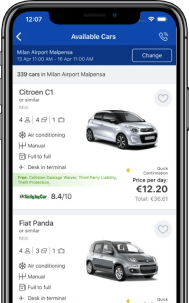
Get the App
or scan QR code to download the APP